
 DE
DE  RU
RU  UK
UK 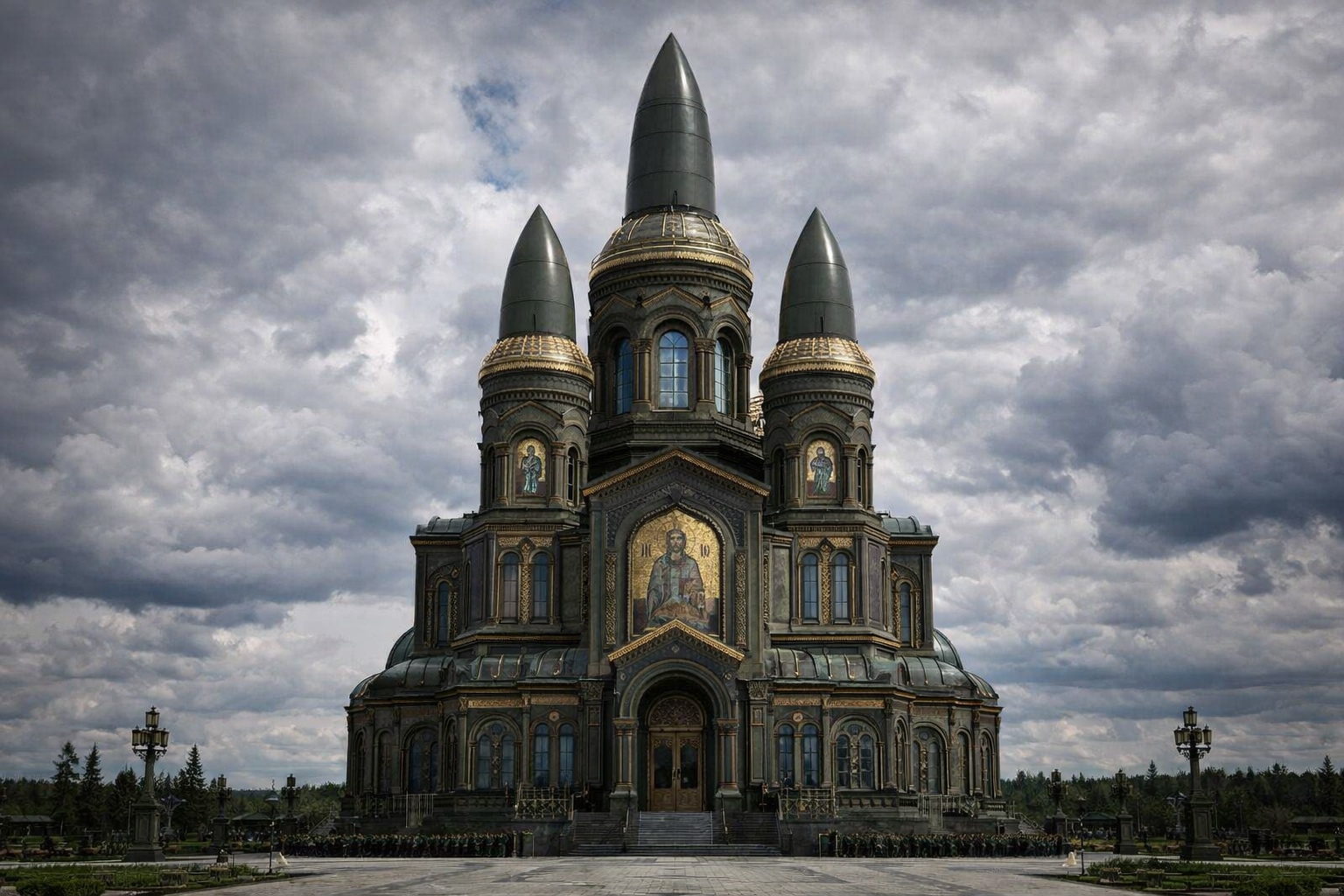
➕ Table of Contents
The question of whether the “Russian World” is a heresy has become almost commonplace in contemporary church discussions. Some theologians propose equating it with the false teachings of the past, while others describe it as a new form of totalitarian religiosity. The reasons are understandable: this ideology has intruded into a space where other words should be spoken and other laws should operate—the space of the Church. It attempts to speak the language of faith, appeals to history, quotes the Holy Fathers, and substitutes political categories for ecclesiastical ones.
And yet, despite the emotional obviousness of the issue, the theological question remains open: can the “Russian World” be called a heresy? Does it correspond to the definition shaped by the universal tradition of the Church? And what exactly in it contradicts Orthodoxy?
Arguments of Those Who Consider the “Russian World” a Heresy
There is an entire group of theologians and church intellectuals who insist that the “Russkiy Mir” is not merely a political doctrine but a modern heresy. In their view, the ideology creates its own vision of salvation, the Church, and history, and therefore goes beyond the boundaries of traditional Orthodox teaching. And indeed, when one listens closely to this position, some of its arguments appear quite logical. Let us consider them.
1. A New Soteriology: Salvation Through Civilization
The first argument is that the “Russian World” offers an alternative concept of salvation. Belonging to the notional “Russian civilization” is presented as a spiritual value in itself and, at times, even as a prerequisite for proper Christianity. According to the logic of this way of thinking, the “correct” path to God is determined not by inner faith, not by participation in the Body of Christ, but by membership in a cultural and political community. This resembles those ancient teachings in which salvation was identified with belonging to a particular Gnostic group or ethnic community.
2. Substitution of Ecclesiology: The Church as Imperial Space
The second argument concerns the blurring of boundaries between the Church and the state. Supporters of the term “heresy” point out that the “Russian World” turns the Church into an appendage of an imperial project. The boundaries of ecclesial belonging, according to this logic, are defined not by the Eucharist, not by episcopal structure, but by language, history, and geopolitics. In other words, the Church ceases to be the mystical Body of Christ and becomes a cultural and political space that is supposed to expand together with the state influence of Russia.
3. Political Messianism: Russia as the “Third Rome”
Another argument is the attribution of a messianic status to the state. The idea of the “Third Rome” is, in itself, a historical narrative that arose in the Middle Ages, but within the context of the Russian World it turns into a quasi-dogmatic assertion. The state acquires the character of chosenness, a historical mission, even an eschatological role. This resembles a secular version of chiliasm, which the early Church repeatedly condemned.
4. Legitimation of Violence as a Dogmatic Norm
The final argument is the apologetics of violence. Russian ideologues, and in some cases church figures as well, call the war sacred, bless aggression, and explain it as “divine will.” For many critics, such a transformation appears to be a distortion of the very nature of Christianity, in which violence has never been regarded as a virtue.
These arguments create the impression that what stands before us is indeed a new form of heresy. But the problem lies elsewhere: in the Orthodox tradition, heresy has a very specific definition. And when we turn to that definition, the picture changes.
Why the “Russian World” Is Not a Heresy, but a Perversion of Orthodoxy
Despite the strength of the emotions and arguments expressed in these discussions, church tradition clearly distinguishes between heresy and distorted practice. Heresy is always an error in doctrine, an attempt to alter dogmas, deny the nature of Christ or the Trinity, or create a new doctrine of salvation. This is precisely why the Church can impose anathemas on heretical movements: they affect the foundations of the faith.
In the case of the “Russian World,” we see something different. This ideology does not rewrite dogmatic formulas. It does not propose another God, another Christ, or another Trinity. Its operation takes place not at the level of doctrine, but at the level of the way Christian life is lived—and this is precisely why it falls into another category of distortion of Orthodoxy.
Orthodox tradition rests on three inseparable components:
- Right faith (orthodoxy) — the correct confession of dogmas.
- Right sacraments — the valid celebration of the Eucharist, Baptism, and Chrismation.
- Right actions (orthopraxy) — life according to the Gospel, in the spirit of love, mercy, and truth.
For a phenomenon to be recognized as a heresy, it must distort the first pillar—orthodoxy. This is precisely what the “Russkiy Mir” does not do. The dogmatic shell remains intact, quotations from the Fathers of the Church remain, and the Creed remains unchanged. Everything appears “canonical.” And this is precisely why some theologians say that we cannot call it a heresy—in the ecclesiastical and legal sense, the necessary element is lacking. But there is something no less destructive: the perversion of orthopraxy.
What the “Russian World” does takes place on another level—the level of practical Christianity, the manner of social and moral conduct. It is not a perversion of dogmas, but a perversion of life. Not a falsification of faith, but a falsification of Christian action.
And this is precisely the key to understanding the phenomenon. The “Russkiy Mir” does not create a new dogmatics, but it distorts the very mode of being within the Church. It is not a heresy in the strict sense, but such a profound violation of orthopraxy that Orthodoxy ceases to be recognizable in those who profess this ideology.
Where the Real Problem Lies: the “Russian World” Contradicts Orthopraxy
If, in the dogmatic field, the “Russkiy Mir” does not create an obvious heresy, then in the field of practical Christianity the situation is entirely different. Here we see not merely errors or political deviations, but a profound contradiction of the Gospel. Orthodox orthopraxy has always been no less defining than orthodoxy: Christ says, “you will know them by their fruits.” It is precisely the fruits that demonstrate the truth or falsity of a religious system. And in this dimension, the “Russian World” displays quite distinct anti-Gospel characteristics.
The foundation of Christian action is reverence for life, the rejection of hatred, and care for one’s neighbor. The Russian World, by contrast, proposes a cult of death and violence under the guise of a “sacred struggle.” In the public discourse of the Russian church leadership, ideological language about “purification,” “liberation,” and “historical mission” acquires a sacred coloring. All of this contradicts the Gospel principles of peace, meekness, and love for one’s enemy—not as political weakness, but as the foundation of Christian life.
Orthodoxy does not deny the right to defense, but it cannot accept aggression as a theological principle. The Russian World does precisely this.
Formally, the sacraments within the jurisdiction of the Russian Orthodox Church remain valid. But the issue is not only one of form—with a change in their inner content, the sacraments become an instrument of state propaganda.
The consecration of weapons, the blessing of military columns, rhetoric about “military processions of the Cross”—these are not merely strange symbolic gestures. This is a transformation of worship: at the center of liturgical life stands not Christ, but the state, its army, and its political project. Thus classical Christian orthopraxy—prayer, repentance, love, mercy—gives way to ritualized nationalism.
Christian tradition teaches that every human being is created in the image of God—regardless of nationality, language, or political views. But the Russian World introduces a different scale of value: “our own” possess the fullness of dignity, while “outsiders” may be “re-educated,” “purified,” “liberated,” or simply destroyed. This is not merely anti-humanism. It is an anthropological doctrine that directly contradicts the Gospel commandment of love.
Such segregation is not a heresy in the sense of a dogmatic distortion—it is a violation of the basic Christian worldview, which must be expressed in actions rather than declarations.
An Orthodox pastor is called to lead a person to Christ, not to political idols. But within the paradigm of the Russian World, clergy often act not as servants of the Gospel but as agents of state policy: they promote aggression, cultivate nationalist attitudes, and legitimize violence.
This violates the very nature of pastoral ministry. Holy Scripture and the patristic tradition repeatedly warn against the temptation to mix the political and the spiritual. The Russian World destroys this boundary, replacing humble service with political instrumentalism.
In the end, what we see is not heresy in the dogmatic sense, but a profound deformation of Christian action—orthopraxy. And this is precisely what makes the ideology of the Russian World so dangerous: it preserves the ecclesiastical form while emptying it from within.
Historical Context: How the Church Punished Heteropraxy
If we look at church history more broadly—not only from the Russian perspective but from that of the universal Church as well—it becomes clear that punishment for heteropraxy, that is, for anti-Christian actions, has always been a normal part of church discipline. Heresy is an error in doctrine. But when the problem lay not in words but in deeds, the Church used different instruments: deposition from clerical office, excommunication, or removal from ministry. And there have been many such cases over the centuries.
In the Rus’ tradition, heteropraxy was treated no less seriously than in the West. In the eleventh and twelfth centuries, the Church fought simony—a corrupt practice that had nothing to do with heresy but undermined the very essence of pastoral ministry. In the sixteenth century, in Muscovy, clergy who blessed the violence of the oprichnina were punished. Patriarch Nikon was removed not for a dogmatic error but for authoritarianism and political ambition. In the nineteenth century, priests were regularly defrocked for drunkenness, abuse, or moral degradation. In the twentieth century, those who participated in or supported Soviet repressions were effectively excommunicated. In the twenty-first century, individual clerics have been punished for promoting violence or cooperating with mafia structures. In all these cases, the grounds were actions incompatible with the Gospel.
International church history provides no less revealing examples. The Ecumenical Councils fought simony as a moral deviation rather than as a heresy. In particular, Christians who renounced the faith under persecution were temporarily excommunicated because of their behavior, not because of a dogmatic deviation. Bishops were punished for political intrigues and violence in Antiquity and the Middle Ages. During the Crusades, military commanders were excommunicated for massacring civilians. In the twentieth century, the Church condemned fascist figures and mafia bosses not because they believed incorrectly, but because of what they did. Conduct incompatible with Christian ethics has always been grounds for the most severe measures.
All these examples—both Russian and universal—demonstrate one consistent pattern: the Church has always punished not only false teaching but also false living. Where the conduct of a minister or community destroyed Gospel ethics, the Church did not hesitate to apply disciplinary measures, up to and including excommunication.
In this context, the conduct of the contemporary Russian church leadership is neither unique nor somehow “beyond judgment.” If in previous centuries clergy were excommunicated for blessing violence, cooperating with tyranny, participating in political repression, or replacing pastoral responsibility with political service, then the same criteria can be applied today.
From a theological point of view, the conclusion is quite straightforward: the patriarch and hierarchs who promote the ideology of the “Russian World” can be excommunicated for the same violations of orthopraxy for which the Church historically punished dozens of their predecessors. This is neither politics nor a modern precedent—it is the internal logic of church tradition, which protects not only right faith but also right living.
Why This Matters: Theological Consequences
Theology never exists in a vacuum. It is always rooted in human behavior, in the way Christians pray, think, and act. Therefore, the question of the “Russian World” cannot be reduced to verbal definitions. It touches upon the very life of the Church.
Heresy as a dogmatic deviation is a formally well-defined category. And if this definition is applied strictly, the “Russkiy Mir” does not fit within it. The dogmas remain untouched—at least outwardly. At the same time, however, this ideology undermines another pillar of church tradition: true Christian life, that practice of faith which is supposed to reveal Christ to the world through peacemaking, repentance, and love for the human person.
This is precisely why the phenomenon of the “Russian World” is dangerous in a subtler and perhaps more destructive way than classical heresies. It does not dispute dogmas—it renders them insignificant. It does not deny the faith—it deprives it of its meaning, turning Christianity into a ritual accompaniment to imperial politics. As a result, what ought to be recognizable disappears: a way of life that corresponds to the Gospel.
This is the principal theological consequence. Not a change in dogmas, but a distortion of Christian action, for the sake of which these dogmas exist. Where orthopraxy is destroyed, even correct faith loses its meaning—it no longer bears witness to Christ, but serves as a justification for violence.
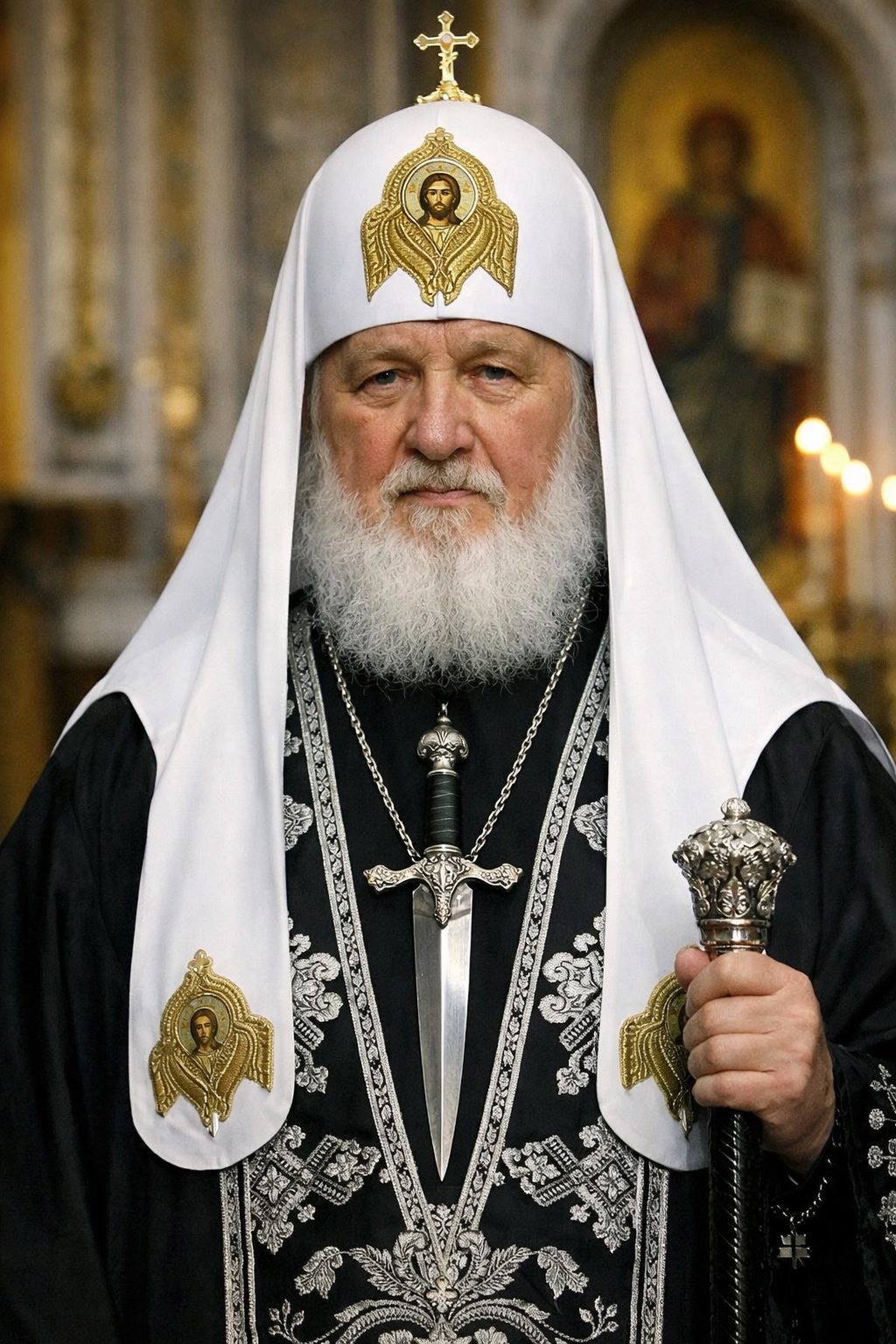
For What Should Patriarch Kirill Be Excommunicated?
The “Russian World” does not create a new dogmatics, formulate a different Creed, or propose a new God. Formally, it does not fit into the classical patterns of heresy. But this does not mitigate the problem; rather, it exposes its true scale. The ideology uses the language of Orthodoxy but directs it against Gospel orthopraxy—against peace, love of one’s neighbor, reverence for human life, and honest pastoral responsibility.
From this point of view, the question “heresy or not heresy” proves to be secondary. What matters more is something else: this ideology distorts Christianity so profoundly that it ceases to be a source of light and love and becomes an instrument for justifying violence. Therefore, by drawing upon its own tradition, the Church has every theological reason to call things by their proper names and apply to the apologists of the “Russian World” the same criteria it applied to violators of orthopraxy in past centuries.
We are not obliged to invent a new theory of heresies. It is enough to look honestly at the fruits. And they already show where this ideology truly leads—and how far it is from what the Church has always called Orthodoxy.