
 DE
DE  RU
RU  UK
UK 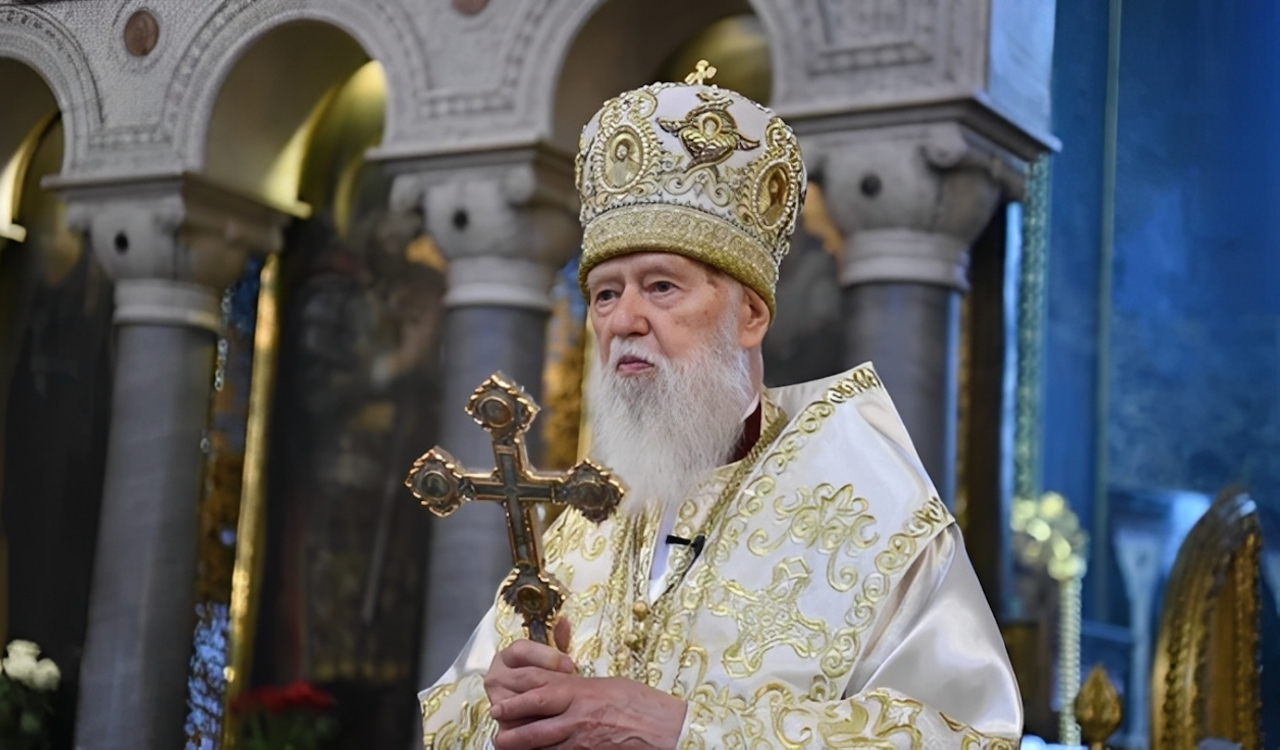
➕ Table of Contents
Patriarch Filaret Denysenko is a figure without whom it is impossible to understand either the late Soviet church system or the dramatic transformations of Ukrainian Orthodoxy at the end of the twentieth century. His biography is often presented either as the story of a fighter for the independence of the Church or as an example of church schism and personal ambition. However, beyond these polar assessments lies a more complex and, perhaps, more accurate picture: Filaret as a typical representative of his era — an era in which a church career was inseparable from interaction with the state, and sometimes from cooperation with its security structures.
During the Soviet years, he was part of a system in which the KGB and the church hierarchy existed in close, though not always publicly acknowledged, interaction. Like many bishops of that time, Filaret acted within the rules dictated by the authorities and for a long time opposed the idea of church independence in Ukraine. But already in the late 1980s and early 1990s, his position changes to the opposite: he becomes one of the main advocates of autocephaly, and then the leader of a new church project.
This sharp turn continues to provoke debate to this day. Was it the result of personal evolution, a reaction to political changes, or an expression of the pragmatism of a man accustomed to working within any system? The answer lies not so much in moral judgment as in an attempt to see Filaret not as an exception, but as a product of his historical environment — with all its compromises, contradictions, and turning points.
Who he is and how he began his career
Filaret Denysenko (born Mykhailo Antonovych Denysenko) was born in 1929 in the Donbas — a region that in Soviet times was deeply integrated into the industrial and ideological system of the USSR. His path into the Church began in the post-war years, when religious life was under strict state control, but had already been partially legalized after Stalin’s turn in 1943.
He received his theological education at the Moscow Theological Academy — a key center for training the church elite. It was here that the type of Soviet church hierarch was formed: educated, disciplined, loyal to the system, and capable of maintaining dialogue with the state. Denysenko’s career advancement was rapid, which in itself indicates his managerial abilities and his skill in navigating a complex church-political environment.
Already in the 1960s, he became one of the prominent representatives of the episcopate of the Russian Orthodox Church, and in 1966 he assumed a key see — becoming Metropolitan of Kyiv and Halych. This was one of the most important positions in the church hierarchy of the USSR: the Kyiv see had not only spiritual but also political significance, as Ukraine remained the largest republic with a highly religious population.
It is important to understand the context: appointments to such positions in Soviet times were impossible without coordination with state authorities. The Church effectively functioned within a system where key decisions passed through the control of party structures and security services, primarily the KGB. This does not necessarily imply direct agent activity in every specific case, but it practically excludes the possibility of full institutional autonomy.
Thus, Filaret’s early career developed within the Soviet model of church governance — a model in which personal initiative was combined with the necessity of taking state interests into account. This experience largely determined his later actions and his ability to adapt to the radically changing conditions of the late twentieth century.
Within the system: Church and Soviet power
By the time he had consolidated his position at the Kyiv see, Filaret Denysenko was no longer just a church administrator, but part of a complex institutional system in which the Russian Orthodox Church performed a strictly defined role. In the late Soviet period, the Church existed as a legal but controlled structure: it was allowed to function, but in exchange for loyalty and predictability.
Within this system, state bodies played a key role, above all the KGB and the Council for Religious Affairs. Their task was not only to limit religious activity but also to manage the church hierarchy — through approval of appointments, control of international contacts, and influence on the internal agenda. Senior hierarchs, including Filaret, inevitably found themselves within this sphere of interaction.
Evidence regarding the nature of these relationships remains a matter of debate. In the post-Soviet period, materials were published pointing to possible contacts between parts of the episcopate and the security services; however, the degree and form of such cooperation in each specific case require careful assessment. What matters more is that the logic of the system itself assumed that without a certain level of trust from the state, it was impossible either to obtain or to retain a high church position.
In practice, this meant participation in official delegations, support for the USSR’s foreign policy line in religious forums, and the suppression of any initiatives that could be perceived as nationalist or anti-state. In this context, Filaret’s position on the Ukrainian church question in the 1970s–1980s appeared quite consistent: he opposed autocephaly, defending the unity of the church structure within the Moscow Patriarchate.
Thus, during the Soviet period, Filaret was not an exception — rather, he represented a typical hierarch of his time: an effective administrator integrated into the state-church model and acting according to its logic. This is precisely why his subsequent transformation in the early 1990s appears so sharp and continues to provoke lively discussion.
The turn: from opponent to supporter of autocephaly
The late 1980s and the collapse of the USSR became a turning point not only for the state, but for the entire church system. For Filaret, this meant the loss of the familiar rules of the game in which he had successfully operated for decades. With the weakening of control from the KGB and party structures, the church elite faced a new question: how to exist in a new political reality where national states and the demand for institutional independence came to the forefront.
Until recently, Filaret had consistently opposed autocephaly, defending the unity of the Russian Orthodox Church. However, already in 1991–1992 his position changed sharply: he became one of the main supporters of full independence for the Ukrainian Church. This turn coincided with the proclamation of Ukraine’s independence and the growing political demand for the creation of national institutions, including ecclesiastical ones.
The reasons for this transformation are still interpreted differently. Some see it as an evolution of views and an attempt to respond to new historical challenges. Others view it as pragmatic calculation and a desire to retain leadership in a context where the previous vertical of power was rapidly collapsing. An important factor was also the internal church conflict: after an unsuccessful attempt to assume the patriarchal throne in Moscow, Filaret’s position within the Moscow center weakened, which may also have pushed him to seek an alternative path.
In 1992, this conflict escalated into open confrontation, leading to a break with the Moscow Patriarchate and the creation of a new church structure — the Ukrainian Orthodox Church of the Kyiv Patriarchate. From that moment on, Filaret became not just a supporter of autocephaly, but its main symbol and politico-ecclesiastical leader.
Thus, his transition from defender of unity to leader of the autocephalous movement appears not so much sudden as conditioned by a combination of personal, institutional, and historical factors. However, it is precisely the sharpness and scale of this turn that have made Filaret one of the most controversial figures in the recent church history of Ukraine.
Leader of a schism or architect of independence?
After 1992, Filaret Denysenko finally stepped beyond the boundaries of the system familiar to him and became a figure of a new type — not only a church hierarch, but also a politico-religious leader. Having headed the Ukrainian Orthodox Church of the Kyiv Patriarchate, he spent decades building an alternative church structure, lacking canonical recognition from world Orthodoxy, yet gradually taking root in Ukrainian society.
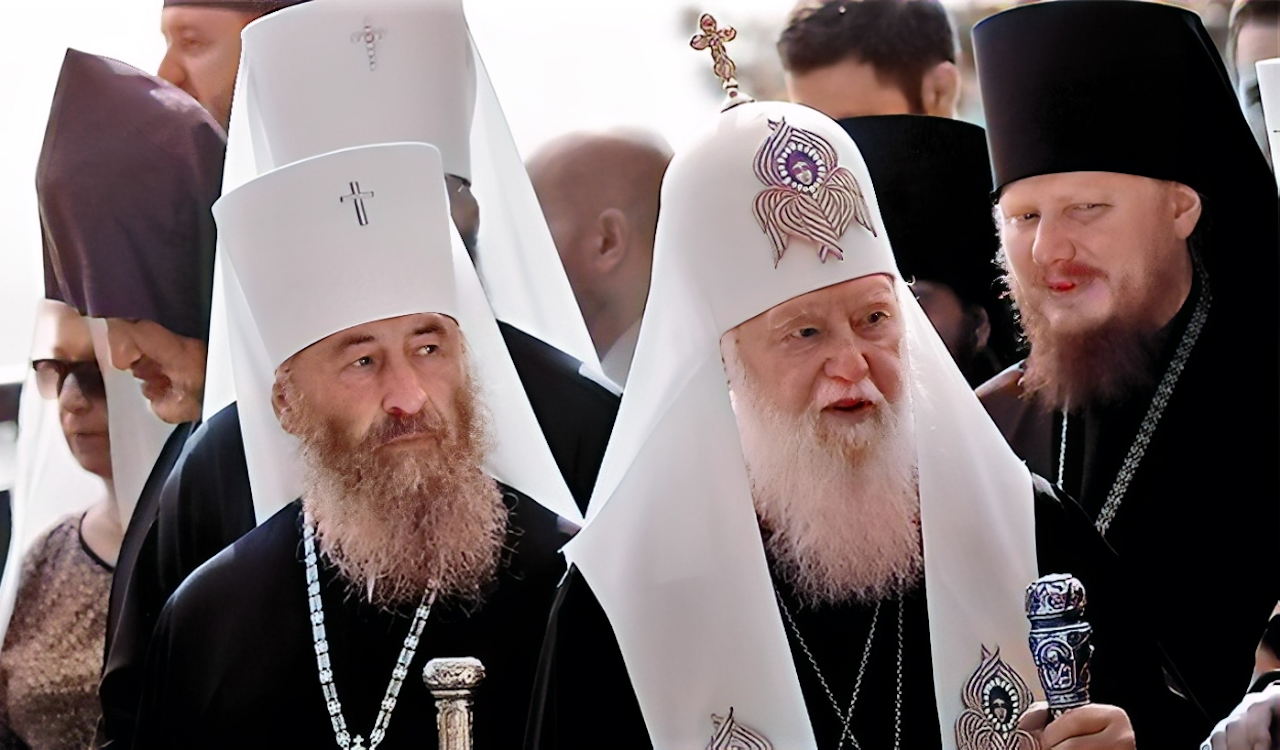
His activities during this period are difficult to assess unambiguously. On the one hand, for his supporters he became a symbol of the struggle for an independent Ukrainian Church, a man who consistently defended the idea of autocephaly in the face of resistance from the Russian Orthodox Church and skepticism from other local churches. In this narrative, Filaret appears as a strategist and organizer who managed to preserve and develop a church structure without external recognition.
On the other hand, his opponents view this period as a deepening of church schism, accompanied by rigid methods of governance, conflicts over churches and canonical territory, and the personalization of power within the structure itself. In this interpretation, Filaret appears less as a spiritual leader and more as an administrator seeking to retain control over the system he created.
The situation became more complicated after 2018, when the Orthodox Church of Ukraine was established and a tomos of autocephaly was received from the Ecumenical Patriarchate. It would seem that the goal he had pursued for decades had been achieved. However, soon afterward Filaret entered into conflict with the new church leadership, effectively attempting to restore the former structure of the Kyiv Patriarchate. This step once again raises the question: what was primary for him — the idea of autocephaly itself, or control over the church organization?
Ultimately, the figure of Filaret remains the subject of intense debate. For some, he is the architect of Ukraine’s church independence; for others, the initiator and symbol of a prolonged schism. In any case, his role in shaping modern Ukrainian Orthodoxy remains key and, in many respects, defining.