
 DE
DE  RU
RU  UK
UK 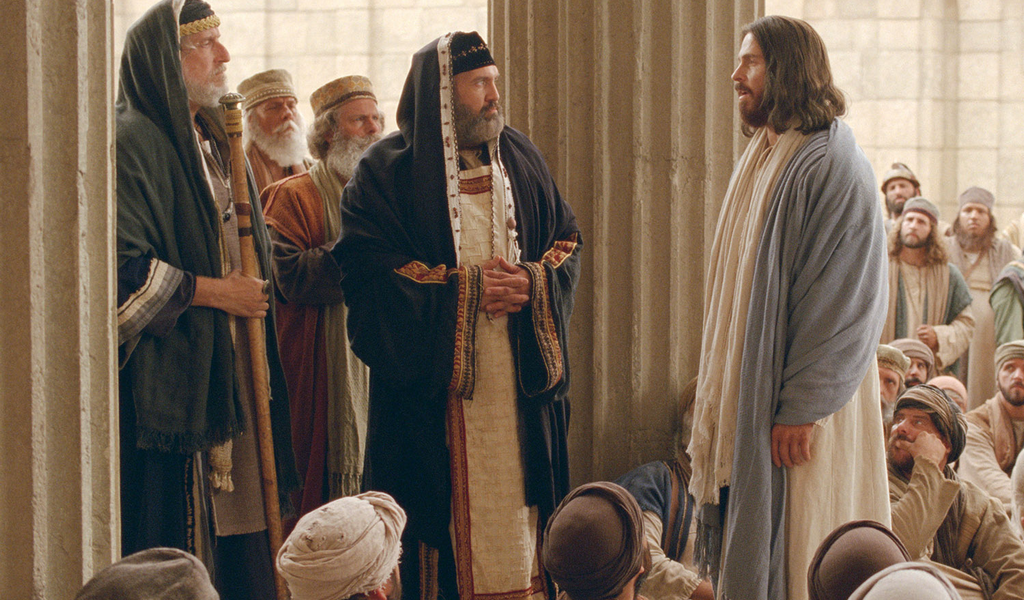
“The Jewish question” in the history of Christianity has been and remains one of the most sensitive. And indeed: Jesus was a Jew, His Apostles were Jews, His people, who failed to recognize in Jesus their Messiah, were the Jewish people.
On the one hand, God’s promises are connected with the people of Israel. On the other hand—many Christians ask themselves—are these promises still valid? And if so, what is God’s will today for the Church and the people of Israel? How should their relationship be shaped? What valuable and important things can the Church draw from the religious life of the Jewish people?
We offer to the readers’ attention a lecture delivered by Father Peter Hocken at the Odessa School of Lay Apostolate named after Stanisław Szułmiński SAC in March 2005.
The Teaching of the Catholic Church on Judaism
Fr. Peter Hocken
I would like to begin our meeting by presenting the teaching of the Catholic Church on Judaism and what exactly happened at the Second Vatican Council. For the first time in the entire history of the Church, the Second Vatican Council formulated the official teaching of the Catholic Church on the Jews. Previously, such official teaching simply did not exist. There were many views and opinions expressed, for example, in sermons. But the Church had no official doctrine on this issue.
Throughout the history of Christianity, Christians developed a negative perception of Jews. This applies to Catholics, Orthodox Christians, and most evangelical churches. The Second Vatican Council helped abolish many stereotypes about Jews that had existed in Catholic circles until then. In particular, ideas such as the notion that God rejected the Jews because they rejected Jesus. From this followed the “conclusion”: the Jews were no longer the chosen people. Therefore, the promises God gave them now belonged not to them but to the Church. This position became known as “replacement theology.”
 The Second Vatican Council rejected this replacement theology, according to which the Church took the place of the Jewish people. The Council teaches that God did not reject the people of Israel, that the Jews remain God’s chosen people, and that the promises made by God to the Jews are irrevocable.
A question arises: what prompted the Council Fathers to address this issue? I believe the main reason was the extermination of six million Jews by the German Nazis, known today as the Holocaust. The Nazis called it “the final solution to the Jewish question,” a plan for the complete annihilation of the Jews. The 20th century witnessed much terrifying evil. But one of the most abhorrent things was Hitler’s plan to destroy the Jews. It was “scientifically developed” and meticulously organized. This plan mobilized all the resources of the German state, all its industrial power, to destroy an entire people. Hitler also declared that he was merely doing what the Church had always taught but never carried out. Hitler said: the Church preached that Jews were a cursed people rejected by God. Now he, the Führer, was bringing to a logical end what the Church had taught. When, in the 1950s and 60s, the facts of what had happened to the Jewish people became widely known, many Christians—both Catholics and Protestants—were forced to ask: what events in earlier history made this tragedy possible?
The Second Vatican Council was convened by Pope John XXIII. Even as Apostolic Nuncio in Bulgaria and Istanbul in the 1930s–1940s, he helped many Jews. The problem of Christian division was also well known to him: he maintained good relations with many representatives of the Orthodox Church in Bulgaria and Istanbul. When the Pope convened the Council, he created the Secretariat for Christian Unity. This Secretariat was located in Rome and could be easily contacted by representatives of Orthodox and Protestant Churches. This was something new: such a Secretariat had never existed before. Pope John invited Augustine Bea—a German Jesuit and biblical scholar—to head it. Among other tasks assigned to the Secretariat was building relations with the Jews. Later we will see that the issue of Christian unity is closely connected with the Church’s attitude toward the Jews.
The appointment of Cardinal Bea resulted, among other things, in the preparation of the Vatican II document on the relationship of the Church to the Jewish people. As I mentioned earlier, for the first time in the Church’s history, an official teaching about the Jews was formulated.
A German by origin, Cardinal Bea was well acquainted with German Nazi propaganda and its consequences. As a result, the text developing the teaching on the Jews was included as paragraph 4 in the Council’s Declaration on the Relation of the Church to Non-Christian Religions, Nostra Aetate. The entire fourth paragraph—perhaps the largest in the document—was devoted to the relationship between the Church and the Jews.
What does this document say? First of all, the Council Fathers assert that speaking of Jews as cursed or rejected is wrong. The document refers to chapter 11 of the Letter to the Romans, where Saint Paul writes that “the gifts and the calling of God are irrevocable” (Rom 11:29). The Declaration also states that Israel’s calling is part of God’s Covenant, part of the mystery of salvation. Therefore, the Church’s attitude toward the Jews differs from its attitude toward other religions.
The conciliar teaching expressed in Nostra Aetate was later developed further by Pope John Paul II. He was among those who reflected deeply on all forms of evil that occurred in the twentieth century. John Paul II was able to give a comprehensive analysis of this evil because he personally lived through it. He lived under two great tyrannies: Nazism and communism. I would also say that John Paul II was the first Pope who had personal experience of this tragedy. In his school in Wadowice, many Jews studied with him, including some close friends. Some of them died in concentration camps, some disappeared during the war. John Paul II repeatedly addressed the relationship between Christians and Jews in his sermons, speeches, and writings.
The teaching of the Church on Judaism and the Jews is particularly clearly expressed in the new Catechism of the Catholic Church (CCC), published in 1992. I would like to refer to some paragraphs of the Catechism to illustrate this concretely. For centuries, it was said that Jews bore collective responsibility for the death of Christ and were therefore called “God-killers.” The Second Vatican Council categorically rejected this viewpoint. And in paragraphs 597–598 of the Catechism this conciliar teaching was developed further.
Paragraph 597 is titled: “The Jews are not collectively responsible for the death of Jesus.” It states: “Taking into account the complexity of the trial of Jesus, as revealed in the Gospel accounts, and the personal sin of the participants (Judas, the Sanhedrin, Pilate), known only to God, one cannot lay the charge of the death of Christ upon all the Jews of Jerusalem, despite the cries of a manipulated crowd and the universal reproaches contained in the appeals to conversion after Pentecost. Jesus Himself, in forgiving on the Cross, and then Peter, recognized the ‘ignorance’ (Acts 3:17) of the Jews of Jerusalem and even of their leaders. Still less can the responsibility for the crucifixion of Jesus be extended to other Jews of different times and places, based upon the crowd’s cry: ‘His blood be on us and on our children’ (Mt 27:25). The Church therefore declared at the Second Vatican Council: ‘...what happened in His passion cannot be charged against all the Jews, without distinction, then alive, nor against the Jews of today... The Jews should not be presented as rejected or accursed by God, as if this followed from Holy Scripture.’”
Paragraph 839 speaks of the relationship of the Church to those of the Jewish people who do not believe in Christ: “Those who have not yet received the Gospel are related to the People of God in various ways.” And elsewhere: “The Church, the People of God in the New Covenant, in examining her own mystery, discovers her link with the Jewish People, ‘the first to hear the Word of God.’ Unlike other non-Christian religions, the Jewish faith is already a response to God’s revelation in the Old Covenant. To the Jewish people ‘belong the sonship, the glory, the covenants, the giving of the law, the worship, and the promises; to them belong the patriarchs, and from them, according to the flesh, is the Christ’ (Rom 9:4–5), for ‘the gifts and the calling of God are irrevocable’ (Rom 11:29).”
In the next paragraph (840) we read: “And when one considers the future, God’s People of the Old Covenant and the new People of God tend toward similar goals: the expectation of the coming (or the return) of the Messiah. But one side looks forward to the return of the Messiah who died and rose again, recognized as Lord and Son of God; the other expects the coming of a Messiah whose features remain hidden, a coming which is accompanied at the end of time by the drama of not recognizing Jesus.”
Thus, the Catechism teaches that in some mysterious way the Jewish people stand at the center of the mystery of salvation; that they belong to the mystery of the Covenant and the mystery of the People of God. And it also says that if we do not understand the calling of the people of Israel, we cannot properly understand the Church.
* * *
A question may arise: were the changes that occurred after the Second Vatican Council merely “external,” or do they touch the very core of our faith? I want to tell you that they touch the very core of our faith! This concerns the identity of Jesus, the identity of Mary, the identity of the Apostles, and the identity of the Church. I don’t think this is a secondary issue: it was so important to the Fathers of Vatican II—which was a council of renewal of the Church. This question was closely intertwined with other key issues of the Church’s life raised at the Council: the renewal of liturgical life, the understanding of the Bible, and the protection of human dignity.
Let us think for a moment about the identity of Jesus of Nazareth. Jesus was a Jew. Jesus was the Messiah of Israel. When we understand this, we enter more deeply into the Old Testament. For from the very calling of Abraham, the Jews were called to be the people of the Covenant. But part of this Covenant was to be a blessing for all nations. We find this in the story of Abraham’s calling in Genesis 12. God says: “I will bless you, and make your name great, so that you will be a blessing; I will bless those who bless you, and the one who curses you I will curse; and in you all the families of the earth shall be blessed” (Gen 12:2–3). When God chooses people, He chooses them not simply for their own sake or for their own benefit. He calls them to become instruments of blessing for others. This is the principle of divine election, the principle of every vocation. The chosen are called not for themselves but to bring something to the “whole body,” to all people.
In Exodus 19 the Lord says to Israel: “For all the earth is Mine, and you shall be to Me a kingdom of priests and a holy nation” (19:5–6). The people of Israel were called to be a priestly people. This is the same idea given to Abraham, but expressed in different words: a priest is a priest not for himself but to bless others. And when the Lord says that Israel is to be a kingdom of priests, this means that Israel is called to be a blessing to other nations. In many passages of the Old Testament we see this universal aspect of Israel’s vocation. All this helps us better understand the ministry of Jesus. For Jesus was a Jew. We actually see His ministry even before He suffered, was crucified, and rose. He tells the Canaanite woman: “I was sent only to the lost sheep of the house of Israel” (Mt 15:24). And when He sends His Apostles to preach, He tells them: “Do not go into the way of the Gentiles, and do not enter a Samaritan town; but go rather to the lost sheep of the house of Israel” (Mt 10:5–6).
The situation changes radically after the Resurrection of Christ. (We will touch on this shortly.) Jesus is the perfect Israelite. For God says to Jesus that He is His firstborn. Jesus is the Son of God. He perfectly fulfilled the vocation of Israel. And He is the Christ, the Anointed of God, the Messiah of Israel. This is seen clearly in the angelic greeting in the scene of the Annunciation. The Gospel of Luke records the words of the Angel speaking to Mary about her Son: “He will be great, and will be called the Son of the Most High; and the Lord God will give Him the throne of His father David; He will reign over the house of Jacob forever, and of His Kingdom there will be no end” (Lk 1:32–33). You see that His vocation for Israel is expressed in these words. And this Jesus—the perfect Israelite, fully obedient to His Father—becomes the Savior of the world. In Jesus Himself the vocation of Israel to bless all the nations is fulfilled. He could become the Savior of the world because He is the Messiah of Israel.
But the majority of the Jewish people did not accept Jesus as their Messiah. This was foretold by the elder Simeon, who said to Mary: “Behold, this Child is appointed for the fall and rising of many in Israel, and for a sign that will be contradicted” (Lk 2:34). Look, He was destined to bring division into His own people! And Simeon prophesies to Mary: “And a sword will pierce your own soul also” (Lk 2:35). This was part of Mary’s suffering, for she saw her Son dying a horrific death on the Cross. Her suffering also included the fact that most of her people, the people of her Son, did not accept Him as the fulfillment of Israel’s prophecies.
* * *
Israel’s rejection of Jesus caused great suffering to the Apostle Paul (cf. Rom 9–11).
The expectation of the coming of the King-Messiah was at the heart of Israel’s faith. A Jew could not even imagine that the Messiah would come and the majority of Israelites would refuse to recognize Him. The Apostle Paul challenges this idea. He writes to the Romans: “I have great sorrow and unceasing anguish in my heart. For I could wish that I myself were accursed and cut off from Christ for the sake of my own people, my kindred according to the flesh, who are Israelites.”
Paul begins his reflection by asking: how could it happen that the Messiah came to Israel and the majority of Israelites did not accept Him? He directly asks: “Has God rejected His people?”
And he answers: “By no means… God has not rejected His people” (Rom 11:1–2). The Apostle affirms that some Israelites believed in Christ, and he calls them the “remnant chosen by grace” (Rom 11:5). But this raises another question, which Paul asks about the Jews who did not believe in Christ: “So I ask, have they stumbled so as to fall?” (Rom 11:11). Paul calls such Jews the “stumbling” ones. And he asks: is restoration impossible for them? He answers: it is not impossible. God has not rejected them forever.
Here Paul uses the image of the olive tree. Israel is like a cultivated olive tree, which God tended for two thousand years. The Gentiles are like a wild olive tree, deprived of this care. “If some of the branches were broken off, and you, a wild olive shoot, were grafted in their place to share the richness of the olive tree, do not boast over the branches. If you do boast, remember that it is not you that support the root, but the root that supports you. You will say: ‘Branches were broken off so that I might be grafted in.’ That is true. They were broken off because of unbelief, but you stand only through faith. So do not become proud, but fear. For if God did not spare the natural branches, perhaps He will not spare you either. Note then the kindness and the severity of God: severity toward those who have fallen, but God’s kindness toward you, provided you continue in His kindness; otherwise you also will be cut off. And even those, if they do not persist in unbelief, will be grafted in, for God has the power to graft them in again. For if you have been cut from what is by nature a wild olive tree and grafted, contrary to nature, into a cultivated olive tree, how much more will these natural branches be grafted back into their own olive tree!” (Rom 11:17–24). The Jews who did not believe in Christ are the broken branches. Christians from the nations—most of us—are branches of the wild olive tree, cut and grafted into the noble root. In this passage Paul tells Gentile Christians: do not boast or be proud over the Jews who did not believe.
Of course, Christians did not heed Paul’s warning. Their attitude toward Jews over the centuries was characterized precisely by what Paul forbade: boasting and pride over the broken-off branches. Paul reminds them that it is easier for God to graft the natural branches back in than to graft in wild ones (Rom 11:24).
In the Letter to the Ephesians the Apostle Paul continues the same theme. He writes that the Church consists of Jews and Gentiles, and that Christ “is our peace; in His flesh He has made both groups into one and has broken down the dividing wall of hostility” (Eph 2:14). Through His death on the Cross, Jesus Christ reconciled Jews and Gentiles in Himself. And Paul says that it is part of the Church’s nature to consist of Jews and Gentiles and to be one. He then assures the Gentiles: “So then you are no longer strangers and aliens, but you are fellow citizens with the saints and members of the household of God” (Eph 2:19). These words of Paul contrast with what we usually hear in our churches: that Jesus founded His Church and that Jews are outside the Church. And that for Jews to be saved, they must join the Church. But what does Paul mean with the image of the olive tree?
He means that Jesus opened Israel to all nations. And the Jews who did not believe in Christ are in a tragic situation, but they are not rejected.
In Romans 11 Paul writes: “I want you to understand this mystery, brothers and sisters, so that you may not claim to be wiser than you are” (Rom 11:25). Israel has experienced a hardening “until the full number of the Gentiles has come in. And so all Israel will be saved” (Rom 11:25–26). Paul says that God used the hardening of many Jewish hearts so that the Gospel could spread among the nations. But he also says that the Gentiles must not be proud or boast over the Jews, because the Jews remain loved by God. And their time of repentance and fullness will come.
This is also expressed in the Catechism of the Catholic Church in paragraphs 673–674, which bear the astonishing title: “The glorious coming of Christ, the hope of Israel.”
“Since the Ascension, Christ’s coming in glory has been imminent, even though ‘it is not for you to know the times or seasons which the Father has fixed by His own authority’ (Acts 1:7). This eschatological coming could be accomplished at any moment, even if it is ‘delayed’ (2 Thess 2:3–12) and ‘the final trial’ that will precede it.” (673).
“The glorious Messiah’s coming is suspended at every moment of history until His recognition by ‘all Israel’ (Rom 11:26; Mt 23:39), for a ‘hardening’ has come upon part of Israel in their ‘unbelief’ toward Jesus (Rom 11:20, 25). Saint Peter says to the Jews after Pentecost: ‘Repent therefore, and turn to God so that your sins may be wiped out, so that times of refreshing may come from the presence of the Lord, and that He may send the Messiah appointed for you, that is, Jesus, who must remain in heaven until the time of universal restoration that God announced long ago through His holy prophets’ (Acts 3:19–21). The Apostle Paul echoes this: ‘For if their rejection means the reconciliation of the world, what will their acceptance be but life from the dead?’ (Rom 11:15). The entry of the ‘full number of the Jews’ (Rom 11:12) into the messianic salvation, in the wake of the ‘full number of the Gentiles’ (Rom 11:25), will enable the People of God to achieve ‘the measure of the stature of the fullness of Christ’ (Eph 4:13), in which ‘God may be all in all’ (1 Cor 15:28).” (674).
The word “fullness” (Greek pleroma) appears twice in Romans 11. “Now if their stumbling means riches for the world, and if their defeat means riches for the Gentiles, how much more will their full inclusion mean!” (Rom 11:12). This is the fullness of Israel. And in verse 25 Paul speaks of the fullness of the Gentiles. These passages are linked with Jesus’ words in Luke 21:24: “Jerusalem will be trampled by the Gentiles until the times of the Gentiles are fulfilled.” The “times of the Gentiles” correspond to the fullness of the Gentiles. Another related passage is Matthew 24:14: “And this Gospel of the Kingdom will be preached throughout the world, as a testimony to all nations; and then the end will come.” The Gospel must be preached to all nations, and only then will the end come.
What does “fullness of the nations” mean? It seems to me that this refers to God’s plan being fulfilled. It also refers to salvation. I think that in some way this means that the Gospel has spread among the nations and that there will be a harvest among all peoples. I do not think it means that literally every single person will be saved, since this contradicts many other passages of Scripture. But it is related to the image found in Revelation 7. John is given a vision of 144,000 sealed from every tribe: “After this I looked, and there was a great multitude that no one could count, from every nation, from all tribes and peoples and languages, standing before the throne and before the Lamb, robed in white” (Rev 7:9). This is an image of fullness, but the previous verses about the 144,000 from the tribes of Israel point to the fullness of Israel. This image expresses the idea (as we read in paragraph 674 of the Catechism) that the Church will reach her fullness when the Jews recognize their Messiah.
So what do the Apostle Paul and the Catechism teach us? Through the unbelief of most Jews the Good News reached all nations. The Gospel must be preached to the ends of the earth until the Second Coming of Christ. This period is called the “time of the nations” (the Gentiles). When the “time of the nations” reaches its fullness, the time will come for the fullness of the Jews, for Israel to reenter the fullness of God’s plan. And today there are many signs indicating that we are living in this phase of history.
Published in: Odessa Theological Readings. Issue 3: Two Covenants of a Single History of Salvation / Ed. A. Dobroer – Odessa 2007. – 36 pp.